1
Curiosity
To keep asking questions and finding out how things work.
Self-awareness
Work out what you care about, why some work drains you even when you’re good at it, and what to do about it.
No credit card · 5–10 min lessons · On your phone
StrengthsWire is a five-week course that brings together the best of capability training and self-awareness, built on thirty years of coaching, consulting and leading teams. Week 1 is the values module, and it’s free.

It’s Sunday afternoon and your shoulders are already tightening. You’re not thinking about Monday yet, but your body is. Most people read that as needing a holiday, a new job, or more discipline. Usually it means something is out of line, and no personality quiz will tell you what.
You hit every target and still feel like you’re performing someone else’s job. Skill and meaning are two different things, and only one of them shows up in a review.
They nitpick, or steamroll, or never seem to care about what you care about. Your brain files it under character. Usually it’s a values clash you can’t see yet.
You’ve done the quiz. You’ve got the four-letter type, the colour, maybe a spirit animal from an offsite. Six months on you’re back at the same search bar, typing the same question.
Most self-awareness tools stop at a type. Retake the most popular workplace personality test a few weeks later and there’s a decent chance you’ll come out a different type (Personality types don’t hold steady: David Pittenger reviewed the evidence on the Myers-Briggs Type Indicator and found as many as half of people landed on a different type when retested about five weeks later. Later summaries of the research put the range across studies at 39% to 76%. Source: Pittenger, D.J. (1993) ‘The utility of the Myers-Briggs Type Indicator’, Review of Educational Research, 63(4), pp. 467–488.). A snapshot of how you felt on a Thursday is a thin foundation for a career decision.
Your values are steadier than that. They’re the reason you took the job, the reason you regret leaving the last one, and the reason a dream role can feel like someone else’s dream.
Self-awareness is knowing why you react the way you do when someone moves your goalposts, takes credit for your work, or tells you to be more strategic. Once you can see that, you can do something about it.

Your values are the roots: they hold you steady. Your strengths are the trunk that carries your growth. Your goals are the fruit. It works when all three line up.
Picture two people in the same role, same skills, same performance review. One feels like they’re winning. The other feels flat: hitting the targets, feeling nothing much, and quietly wondering what’s wrong with them.
Nothing is wrong with them. The pattern has a name, introjected regulation (Introjected regulation: A form of motivation identified in Self-Determination Theory: working not for the satisfaction of the work but to avoid guilt, anxiety or the fear of falling behind. Hitting a goal under introjected regulation produces relief rather than fulfilment, and relief evaporates, which is why success can feel hollow even when the scoreboard says you’re winning. Source: Ryan, R.M. and Deci, E.L. (2000) ‘Self-determination theory and the facilitation of intrinsic motivation, social development, and well-being’, American Psychologist, 55(1), pp. 68–78.): working to stay ahead of guilt and expectation rather than for the work itself, so hitting the goal brings relief instead of satisfaction (Self-determination theory: People do their best, and stay well, when their work meets needs for autonomy, competence and connection. Work that cuts against what matters to you drains more than hard work does. Source: Ryan, R.M. and Deci, E.L. (2000) ‘Self-determination theory and the facilitation of intrinsic motivation, social development, and well-being’, American Psychologist, 55(1), pp. 68–78.). The first person’s work lines up with what they care about. The second is performing well at something that doesn’t matter to them, and they can feel it every day.
Find your star. Try StrengthsWire.
Start Week 1 freeBurnout is a mismatch between the work and what you value (Burnout is a fit problem: The six person–job mismatches that drive burnout: workload, control, reward, community, fairness and values. Workload and values consistently come out strongest. Burnout is a fit problem, not a stamina flaw. Source: Leiter, M.P. and Maslach, C. (2003) ‘Areas of worklife: a structured approach to organizational predictors of job burnout’, in Perrewé, P.L. and Ganster, D.C. (eds) Emotional and Physiological Processes and Positive Intervention Strategies (Research in Occupational Stress and Well Being, Vol. 3). Bingley: Emerald, pp. 91–134.), not a stamina flaw. Once you can see the mismatch, you stop running on willpower and put your effort where it’s pulled rather than pushed (Pushed vs pulled (workaholism vs engagement): Research on heavy workers distinguishes two engines behind the same long hours. Engaged workers are pulled toward work that matters to them and thrive on big loads. Workaholics are pushed through the same hours by compulsion, guilt and the inability to disengage, and only the pushed burn out. The hours aren’t the variable; the engine is. Source: Schaufeli, W.B., Taris, T.W. and van Rhenen, W. (2008) ‘Workaholism, burnout, and work engagement: three of a kind or three different kinds of employee well-being?’, Applied Psychology, 57(2), pp. 173–203.).
Your brain explains other people by their character and yourself by your circumstances (it’s a known bias) (Fundamental Attribution Error: The human tendency to underestimate situational factors and overemphasise character when explaining other people’s behaviour, while doing the reverse for our own. At work it turns a colleague’s careful risk assessment into “they’re hostile” and a manager’s pressure from above into “they don’t trust me”. Named by psychologist Lee Ross in 1977. Source: Ross, L. (1977) ‘The intuitive psychologist and his shortcomings: distortions in the attribution process’, Advances in Experimental Social Psychology, 10, pp. 173–220.). Most friction at work is two decent values pulling in opposite directions (The circle of human values: Shalom Schwartz’s research, tested across dozens of countries, finds that values sit in a circle: some sit side by side, and others pull against each other, like freedom and security. Source: Schwartz, S.H. (2012) ‘An overview of the Schwartz theory of basic values’, Online Readings in Psychology and Culture, 2(1).). Once you can see that, it stops being personal.
Fixing a weakness gets you to average. Building a strength is where the growth is, and your values hold steadier than a personality type that can change by the next retest (Personality types don’t hold steady: David Pittenger reviewed the evidence on the Myers-Briggs Type Indicator and found as many as half of people landed on a different type when retested about five weeks later. Later summaries of the research put the range across studies at 39% to 76%. Source: Pittenger, D.J. (1993) ‘The utility of the Myers-Briggs Type Indicator’, Review of Educational Research, 63(4), pp. 467–488.).
You sort forty values cards, drawn from a model tested across 80+ countries (Schwartz’s theory of basic human values: A framework of universal human values, validated across more than 80 countries, arranged in a circle. Adjacent values (like Power and Achievement) are compatible and can be pursued together; values on opposite sides of the circle are in direct psychological conflict. The circle groups into four quadrants: Openness to Change, Conservation, Self-Enhancement and Self-Transcendence. Your top values are the “why” underneath your behaviour. Source: Schwartz, S.H. (2012) ‘An overview of the Schwartz theory of basic values’, Online Readings in Psychology and Culture, 2(1).), and rank your top five. Every card you move down is a choice, and by the end you can see what matters most to you, in order.
StrengthsWire is a five-week course that brings together the best of capability training and self-awareness, built on thirty years of coaching, consulting and leading teams. Find out more about us.
Start Week 1 freeNo credit card · 5–10 min lessons · On your phone
People who use what they’re naturally great at every day are six times more likely to be engaged at work.
Conflict between people is about sixteen times more damaging to team performance than conflict about the work itself.
The retest rate within five weeks for the most popular workplace personality test. Your values don’t change with your Friday mood.
Rank forty values cards, built on a framework validated across 80+ countries, and land on your top five.
Hold your top five against the work you do now. The gaps explain the Sunday knot.
A result you can take into a career decision, a one-on-one, or the next conversation with that colleague.
Six we hear most, each answered on three layers: what you value, how you’re wired, and what you’ve probably misread. Open the one that’s yours.
That thought tends to arrive after years of being good at what other people need from you. Underneath it sit values you’ve stopped asking about, strengths working toward someone else’s goals, and a misread that turns the gap into a personal failing.
The values layer. There are two kinds of self-awareness (Internal and external self-awareness: Two separate kinds of self-awareness. Internal self-awareness is how clearly you see your own values, reactions and what you need from your work; external self-awareness is how well you know the way other people see you. Research finds virtually no relationship between the two, so you can be sharp on one and blind on the other. The first grows by asking yourself better questions; the second only by asking other people. Source: Eurich, T. (2018) ‘What self-awareness really is (and how to cultivate it)’, Harvard Business Review, 4 January.): how clearly you see your own values and reactions, and how well you read what other people see and want. They grow separately. Spend a decade reading the room, the manager and the brief, and the outward kind gets very sharp while the inward kind goes quiet. You know exactly what everyone needs from you by Friday. Ask what you want and there’s static, because nobody, you included, has asked in years.
The strengths layer. Your strengths haven’t gone anywhere. They’ve been working hard on goals someone else chose. That’s how a capable person ends up with a strong trunk carrying fruit they never picked: the skills grow, the results look good on paper, and none of it feels like yours. Autonomy, a real say in what you do and how, is one of the three basic psychological needs (Self-Determination Theory: The leading research framework on human motivation, from psychologists Richard Ryan and Edward Deci. Wellbeing and intrinsic drive depend on three basic psychological needs being met: autonomy (a say in how you work), competence (feeling capable) and relatedness (connection to others). Thwart them, above all autonomy, and motivation collapses regardless of pay or title. Source: Ryan, R.M. and Deci, E.L. (2000) ‘Self-determination theory and the facilitation of intrinsic motivation, social development, and well-being’, American Psychologist, 55(1), pp. 68–78.). Years without it wear down your sense of what you’d choose if anyone asked.
The misread. It feels like having no identity. More often it’s introjected regulation (Introjected regulation: A form of motivation identified in Self-Determination Theory: working not for the satisfaction of the work but to avoid guilt, anxiety or the fear of falling behind. Hitting a goal under introjected regulation produces relief rather than fulfilment, and relief evaporates, which is why success can feel hollow even when the scoreboard says you’re winning. Source: Ryan, R.M. and Deci, E.L. (2000) ‘Self-determination theory and the facilitation of intrinsic motivation, social development, and well-being’, American Psychologist, 55(1), pp. 68–78.): working to keep guilt and expectation at bay rather than for the work itself. Under that engine, hitting a target brings relief, and the relief is gone by Monday. So you conclude you don’t want anything, when what you’ve lost is practice at wanting. The wants are still there. They’ve had no airtime, and they come back faster than you’d expect once someone asks the right questions.
Notice who you envy. Envy is a crude but honest signal. The colleague whose job you quietly want, the friend whose weekends make you wistful: write down exactly what they have, and there’s usually a value hiding in it.
Track the hours that disappear. For two weeks, note when time ran fast and when it dragged. What pulls you in tells you more than any amount of asking yourself what you want.
Take back one small decision. Pick one piece of work this week where you decide how it’s done, start to finish. Choosing, even about small things, is how you relearn what you prefer.
Name what’s been running underneath. Most people can name what their job wants from them faster than what they want from it. Sort forty values down to your top five in Week 1, free, and you’ll have words for what you’d choose when nobody else is choosing for you.
Most advice says reflect more, and that’s half right at best. Self-awareness comes in two kinds that need different work, a personality type only covers part of one, and the usual way of reflecting can leave you less clear than when you started.
The values layer. Self-awareness splits into an inward half and an outward half (Internal and external self-awareness: Two separate kinds of self-awareness. Internal self-awareness is how clearly you see your own values, reactions and what you need from your work; external self-awareness is how well you know the way other people see you. Research finds virtually no relationship between the two, so you can be sharp on one and blind on the other. The first grows by asking yourself better questions; the second only by asking other people. Source: Eurich, T. (2018) ‘What self-awareness really is (and how to cultivate it)’, Harvard Business Review, 4 January.), and the inward half starts with what you value (Schwartz’s theory of basic human values: A framework of universal human values, validated across more than 80 countries, arranged in a circle. Adjacent values (like Power and Achievement) are compatible and can be pursued together; values on opposite sides of the circle are in direct psychological conflict. The circle groups into four quadrants: Openness to Change, Conservation, Self-Enhancement and Self-Transcendence. Your top values are the “why” underneath your behaviour. Source: Schwartz, S.H. (2012) ‘An overview of the Schwartz theory of basic values’, Online Readings in Psychology and Culture, 2(1).). Values explain your reactions in a way a type can’t. A type says you like structure. Your values say why a moved deadline wrecks your evening, and why being second-guessed makes you want to quit by lunch. A type is a snapshot; your values are the ground it stands on, and the thing you’ll lean on when you weigh a job offer or pick which fight is worth having.
The strengths layer. Your strengths are the other piece of the inward picture: how you think, decide and get things done when nobody’s steering. How that wiring lands on other people is invisible from the inside. Your quick, decisive style may read as impatience to the careful person across the table; your thoroughness may read as stalling to the fast one. That outward half can’t be worked out alone, however honest you are with yourself. It takes feedback from people who watch you work and are willing to say what they see.
The honest answer. Thinking harder about yourself can make things worse. In one large study, people who introspected a lot were less self-aware (Most of us are less self-aware than we think: A study of nearly 5,000 people found two separate kinds of self-awareness, how clearly you see yourself and how well you know how others see you, with virtually no relationship between them. Most people believed they were self-aware, but only 10 to 15% met the researchers’ criteria, and the highly self-aware asked themselves “what” far more often than “why”. Source: Eurich, T. (2018) ‘What self-awareness really is (and how to cultivate it)’, Harvard Business Review, 4 January.) and less satisfied at work. The trouble is the question. “Why am I like this?” sends you hunting for causes you can’t see, and you tend to land on a story about your flaws. The highly self-aware asked “what” far more often: what situations drain me, and what do they have in common? A “what” question points at something you can change.
Swap one why for a what. Next time a day goes badly, skip “Why am I like this?” and ask “What was happening when it turned?” Write the answer down. Ten of those and you’ll see a pattern.
Find two honest people. Choose people who want you to do well and will tell you the truth. Ask one narrow question, like “What do I do in meetings that doesn’t help?”, and check anything surprising with the second before you act on it.
Ask how it landed. After a hard conversation, ask the other person what they took from it. The gap between what you meant and what they heard is the outward half of self-awareness in one sentence.
Start with the inward half. Values are the quickest way in, because they explain your reactions instead of labelling them. Rank forty values and see your top five in Week 1, free, then take the result to your two honest people.
It depends on whether it turns into anything. Thinking about yourself and understanding yourself are separate skills, and when the first runs without the second you get the curse: hours of examining, very little clarity, and a mind that won’t switch off.
The values layer. Self-knowledge that lands somewhere is good for you. People who see their own values and reactions clearly report more satisfaction at work and less anxiety and stress (Most of us are less self-aware than we think: A study of nearly 5,000 people found two separate kinds of self-awareness, how clearly you see yourself and how well you know how others see you, with virtually no relationship between them. Most people believed they were self-aware, but only 10 to 15% met the researchers’ criteria, and the highly self-aware asked themselves “what” far more often than “why”. Source: Eurich, T. (2018) ‘What self-awareness really is (and how to cultivate it)’, Harvard Business Review, 4 January.). The key word is clearly. Knowing you value fairness, and that’s why a colleague’s shortcut keeps you up at night, is the gift: it tells you what the feeling is about and what would settle it. Turning the same evening over and over without that name is the curse.
The strengths layer. For some people the curse is a strength pointed the wrong way. Themes like Deliberative, Analytical or Intellection are built to examine things until they hold up. Aim them at a project and they’re an asset. Aim them at yourself at 11pm with the dial stuck on high and they become a strength overused (Overused strength: A strength run with the dial stuck on high stops being an asset: Responsibility becomes taking over every ball in sight, Deliberative becomes analysis paralysis, scrutiny becomes a wall. Research on thousands of executives found leaders who overuse a strength are rated less effective than leaders with plain weaknesses. The fix is calibration, not removal. Source: Kaiser, R.B. and Kaplan, R.E. (2009) ‘Stop overdoing your strengths’, Harvard Business Review, 87(2), pp. 100–103.): auditing your last meeting, stress-testing a comment from three weeks ago, finding one more angle on a decision you’ve already made.
The trap. Researchers measure reflection and insight (Reflection vs insight: Self-reflection is how much you examine your own thoughts and feelings; insight is how clearly you understand them. Research measures them separately because they behave differently: reflection tracked with more anxiety and stress, insight with less. Reflection that never turns into insight starts to look like rumination, going over the same ground without getting anywhere. Source: Grant, A.M., Franklin, J. and Langford, P. (2002) ‘The Self-Reflection and Insight Scale: a new measure of private self-consciousness’, Social Behavior and Personality, 30(8), pp. 821–835.) separately because they pull apart. Reflection is how much you examine yourself; insight is how clearly you understand what you find. In the research, reflection went with more anxiety and stress, and insight with less. One finding stings: people who kept diaries scored higher on reflection and lower on insight. Past a certain point, the looking turns into rumination, and more of it only digs the groove deeper.
Give the thinking a deadline. Fifteen minutes, on paper, then stop. A thought that’s been written down tends to stop circling, and the deadline tells your brain the session is over.
End every round with a what. Close any spell of reflection with one question: what will I do differently, and when? If you can’t answer it, you were ruminating, and more time won’t help.
Point the strength outward. Give your examining brain a real problem: a plan to stress-test, a decision a friend is stuck on. It does its best work on things outside your own head.
Give the reflection something to land on. Insight needs a name for what you’re looking at. Sort your values down to a top five in Week 1, free, and the next late-night loop has a starting point: which value is this about?
Because knowing why you do something has never been enough to stop doing it. Insight explains the loop. Three other things keep it running: an environment that clashes with what you value, a finish line that keeps moving, and the motive underneath the effort.
The values layer. You can understand a values clash perfectly and still live inside it every day. If your top value is freedom to do things your way and your workplace runs on sign-offs and process, that’s a collision between opposite sides of the values map (Openness to Change vs Conservation: The most common axis of workplace conflict on the values circle. Openness to Change runs on self-direction and stimulation: autonomy, novelty, creative problem-solving. Conservation runs on security and conformity: stability, protocol, risk mitigation. What one side experiences as prudent standards, the other experiences as suffocating control; what one calls agility, the other calls recklessness. Both sides are defending something legitimate. Source: Schwartz, S.H. (2012) ‘An overview of the Schwartz theory of basic values’, Online Readings in Psychology and Culture, 2(1).), and it plays out every morning whether or not you’ve named it. Insight changes how you read the friction. The friction itself stays put until something changes in the work, the role or the terms you’ve agreed to.
The strengths layer. Strong drive themes add a loop of their own. If you lead with Achiever, every day starts at zero: yesterday’s finished list doesn’t count, so there’s always more to do before you’ve earned a rest. You can know this about yourself in fine detail and still stay late tonight, because a strength responds to structure far more than to self-knowledge. Without a definition of “done” set before the day starts, the finish line drifts and the drive keeps chasing it.
The trap. Look at what’s fuelling the effort. When work runs on introjected regulation (Introjected regulation: A form of motivation identified in Self-Determination Theory: working not for the satisfaction of the work but to avoid guilt, anxiety or the fear of falling behind. Hitting a goal under introjected regulation produces relief rather than fulfilment, and relief evaporates, which is why success can feel hollow even when the scoreboard says you’re winning. Source: Ryan, R.M. and Deci, E.L. (2000) ‘Self-determination theory and the facilitation of intrinsic motivation, social development, and well-being’, American Psychologist, 55(1), pp. 68–78.), avoiding guilt and the fear of slipping rather than wanting the thing itself, finishing brings relief, the relief fades, and the pressure is back by morning. That’s the cycle. Research on heavy workers finds long hours you’re pulled toward (Pushed vs pulled (workaholism vs engagement): Research on heavy workers distinguishes two engines behind the same long hours. Engaged workers are pulled toward work that matters to them and thrive on big loads. Workaholics are pushed through the same hours by compulsion, guilt and the inability to disengage, and only the pushed burn out. The hours aren’t the variable; the engine is. Source: Schaufeli, W.B., Taris, T.W. and van Rhenen, W. (2008) ‘Workaholism, burnout, and work engagement: three of a kind or three different kinds of employee well-being?’, Applied Psychology, 57(2), pp. 173–203.) are sustainable, while the same hours pushed by compulsion are the ones that burn people out. Your self-awareness is watching the push, and watching doesn’t switch it off.
Write down “done” before you start. Three things that make today a finished day. When they’re done, you stop, even if the list could go on. Decide it in the morning, before you’re tired enough to argue.
Check the engine before the effort. Before you take something on, ask: am I doing this because I want the result, or because I’ll feel bad if I don’t? The second answer is the one that keeps you looping.
Change the conditions. If the cycle is a values clash, more insight won’t end it. Negotiate one thing: who signs off, how often you report, which decisions are yours. A small change to the setup outlasts a big resolution.
Find the value the cycle keeps hitting. A loop that won’t break usually runs straight across something you care about. See your top five values in Week 1, free, and you’ll know which condition to change first.
You’re the one thing all those jobs have in common, so it’s a fair question. The answer is more useful than yes or no: what travels with you is your values and your wiring, and the friction comes from where they keep landing.
The values layer. Your values come with you from job to job, and they don’t change much. So if you run on autonomy and keep taking roles in cultures built on approvals and oversight, you’ll meet the same clash between freedom and control (Openness to Change vs Conservation: The most common axis of workplace conflict on the values circle. Openness to Change runs on self-direction and stimulation: autonomy, novelty, creative problem-solving. Conservation runs on security and conformity: stability, protocol, risk mitigation. What one side experiences as prudent standards, the other experiences as suffocating control; what one calls agility, the other calls recklessness. Both sides are defending something legitimate. Source: Schwartz, S.H. (2012) ‘An overview of the Schwartz theory of basic values’, Online Readings in Psychology and Culture, 2(1).) in every one: different manager, same argument. Research on fit at work (Fit at work matters: A meta-analysis of 172 studies on how well people fit their job, organisation, team and boss. Fit was linked to how satisfied and committed people felt, how much strain they reported and whether they stayed. Source: Kristof-Brown, A.L., Zimmerman, R.D. and Johnson, E.C. (2005) ‘Consequences of individuals’ fit at work: a meta-analysis of person–job, person–organization, person–group, and person–supervisor fit’, Personnel Psychology, 58(2), pp. 281–342.) finds that how well people match their organisation tracks with how satisfied they are, how much strain they carry and whether they stay. The common denominator is real. It’s the fit you keep choosing.
The strengths layer. Your strengths travel too, and in the wrong setting they read as the problem. Someone leading with Command or Activator gets called pushy in a careful culture. Someone leading with Deliberative gets called negative in a fast one. Same person, same wiring, and one room reads it as an asset while the next reads it as friction. If the same comment turns up in three reviews, it’s worth hearing. It usually points to a strength that needs adjusting for the room, rather than an edge to sand down.
The misread. Two misreads tend to run at once. Colleagues file your style under character (“difficult”, “intense”) when it’s wiring. Then you do the same to yourself: if the friction is everywhere, the attribution error (Fundamental Attribution Error: The human tendency to underestimate situational factors and overemphasise character when explaining other people’s behaviour, while doing the reverse for our own. At work it turns a colleague’s careful risk assessment into “they’re hostile” and a manager’s pressure from above into “they don’t trust me”. Named by psychologist Lee Ross in 1977. Source: Ross, L. (1977) ‘The intuitive psychologist and his shortcomings: distortions in the attribution process’, Advances in Experimental Social Psychology, 10, pp. 173–220.) says the flaw must be you. More often it’s the pattern of rooms you keep walking into. That’s the good news in the question, because a pattern of choices can change in a way your personality never will.
Write down the last three frictions. One line for the clash in each of your last three jobs. Look for what sits underneath all three: being slowed down, being overruled, being rushed. That’s the thing travelling with you.
Interview the culture before you sign. Ask how decisions get made, who signs off on what, and what happened to the last person who pushed back. The answers tell you whether you’re walking into the same clash.
Adjust the dial for the room. Keep the wiring and change the volume: a heads-up before you push, a question before you challenge. For collisions with one specific person, the conflict questions go deeper.
Name what you keep defending. The friction follows you because a value does. Sort forty values and see your top five in Week 1, free, and use them as the checklist for your next role.
You probably have someone in mind. The gap usually has less to do with character than with three things: a defence they’ve put up, feedback that never reaches them, and how you’re reading them.
The values layer. Some people who seem to have no self-awareness used to have plenty. When work cuts across what someone values for long enough, a common defence is cynicism (The three dimensions of burnout: Burnout is measured on three dimensions: exhaustion that rest doesn’t shift, cynicism (a growing distance from the work) and reduced efficacy (doubting a competence you objectively have). Cynicism is not laziness; it’s a defensive posture the mind adopts to stop spending emotional energy that brings no return. Source: Maslach, C. and Leiter, M.P. (2016) ‘Understanding the burnout experience: recent research and its implications for psychiatry’, World Psychiatry, 15(2), pp. 103–111.): a growing distance from the job that stops them spending feeling on it. Looking inward hurts when the honest answer is “this place is wrong for me”, so they stop looking. What reads as oblivious can be a shutter that came down a year ago. If that person reports to you, the burnout page covers getting them back.
The strengths layer. The rest is often a gap in the outward kind of self-awareness (Internal and external self-awareness: Two separate kinds of self-awareness. Internal self-awareness is how clearly you see your own values, reactions and what you need from your work; external self-awareness is how well you know the way other people see you. Research finds virtually no relationship between the two, so you can be sharp on one and blind on the other. The first grows by asking yourself better questions; the second only by asking other people. Source: Eurich, T. (2018) ‘What self-awareness really is (and how to cultivate it)’, Harvard Business Review, 4 January.): knowing how your wiring lands on other people. A boss who leads with Command experiences their own directness as clarity. The team experiences being steamrolled and says nothing. That silence grows with seniority: the more senior someone is, the fewer people give them honest feedback, and the more they tend to overrate themselves. Often the signal never reaches them.
The misread. Before you settle on “no self-awareness”, a humbling number: most people believe they’re self-aware, and one large study estimated only 10 to 15 per cent (Most of us are less self-aware than we think: A study of nearly 5,000 people found two separate kinds of self-awareness, how clearly you see yourself and how well you know how others see you, with virtually no relationship between them. Most people believed they were self-aware, but only 10 to 15% met the researchers’ criteria, and the highly self-aware asked themselves “what” far more often than “why”. Source: Eurich, T. (2018) ‘What self-awareness really is (and how to cultivate it)’, Harvard Business Review, 4 January.) of the people it studied met the bar. That includes most of us. The Fundamental Attribution Error (Fundamental Attribution Error: The human tendency to underestimate situational factors and overemphasise character when explaining other people’s behaviour, while doing the reverse for our own. At work it turns a colleague’s careful risk assessment into “they’re hostile” and a manager’s pressure from above into “they don’t trust me”. Named by psychologist Lee Ross in 1977. Source: Ross, L. (1977) ‘The intuitive psychologist and his shortcomings: distortions in the attribution process’, Advances in Experimental Social Psychology, 10, pp. 173–220.) makes their blind spot look like character while ours looks like a bad week. Teams with a shared language (Shared language: A standard vocabulary a team uses to describe how its people differ: what each person values, how each one processes information and risk. With it, behaviour stops getting filed under character (“she’s hostile”) and gets filed under wiring (“she leads with Deliberative; she stress-tests what she takes seriously”), which is how teams keep psychological safety while holding standards high. Source: de Wit, F.R.C., Greer, L.L. and Jehn, K.A. (2012) ‘The paradox of intragroup conflict: a meta-analysis’, Journal of Applied Psychology, 97(2), pp. 360–390. (on why the personal reading is so costly)) for how each person is wired get further, because the vague verdict turns into a specific observation someone can hear.
Describe the moment, not the person. Swap “you have no self-awareness” for one event: “In Tuesday’s meeting, when you answered for Priya, she stopped talking.” A specific moment can be heard. A verdict on someone’s character gets defended.
Ask before you tell. “How do you think that meeting went for the team?” gives them the chance to see it for themselves, and something people notice on their own sticks far better than something they’re told.
Check your own outward half. Ask someone you trust whether you ever do something similar. It’s uncomfortable, and it’s the quickest way to stop someone else’s blind spot taking up your whole week.
Work out why it gets under your skin. Their blind spot bothers you most where it runs over something you care about. Map your own values in Week 1, free, and you’ll know which part is about them and which part is about you.
Thirty years of coaching, consulting, and leading teams between them, and the same pattern in every room: the moment someone understands what drives them and where their energy comes from, they read the people around them better and put their energy where it counts. Work starts to feel like swimming with the current instead of against it.

Gallup-Certified Strengths Coach & Founder
Former Chief Product Officer who spent twenty years leading big teams at Australia’s largest companies, and found strengths and values work the single biggest unlock for growing herself and the people she led.

BSc(Hons), GradDip(Psyc), PhD
A strategy and human behaviour geek with a PhD: she brings a scientist’s rigour to why people do what they do, and has spent more than a decade helping organisations from scale-ups to Australia’s largest companies find the gaps in their strategy and their people, and close them.
The world keeps trying to round you out. Fix the gaps, sand down the edges, become a well-balanced generalist. StrengthsWire starts from the opposite end: your edges are the point.
The goal is knowing what you’ve got and learning to aim it.
Developing a strength gives exponential growth. Fixing a weakness only gets you to average.
Misunderstanding what drives others causes conflict. Clarity on values changes how a team relates.
In the age of AI, understanding yourself and the people you work with is the skill that compounds.
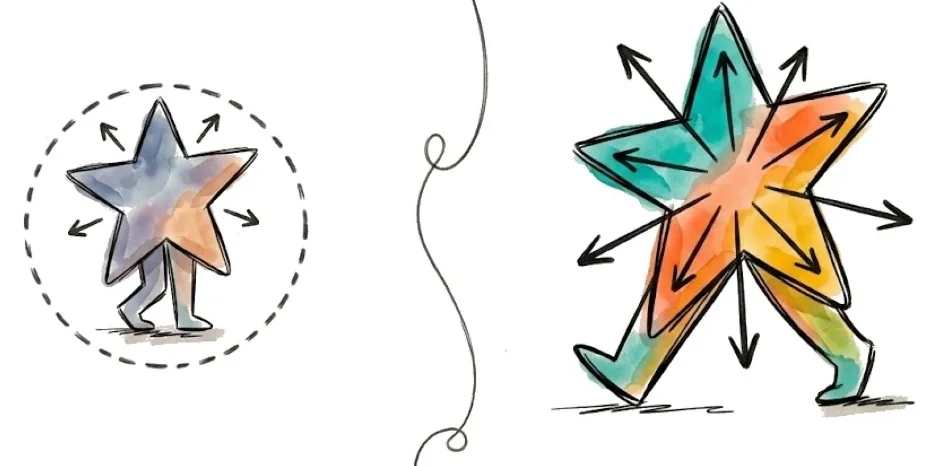
Forty values, ranked, and your top five by the end of the week. Week 1 is free, takes ten minutes a day on your phone, and the answer is one you can take into a career decision, a one-on-one, or the next conversation with that colleague.