The half day is for a team deciding together how it works with AI. The fast track is for you, set up around your own week.
Many leaders do the fast track first, then bring the half day to their team.
AI enablement · For leaders, teams and executives
We help your team, and you, work well with AI: what to hand over, what to keep, and how to work together around it.
Sydney · Melbourne · Online anywhere

The companies getting the most from AI put 70% of their effort into people and processes (The 10-20-70 rule for AI: A survey of 1,000 executives across 59 countries. The companies getting the most value from AI put 10% of their resources into algorithms, 20% into technology and data, and 70% into people and processes. Source: Boston Consulting Group (2024) Where’s the value in AI? Boston: BCG.), not the technology.
You walk away able to:
Most rollouts start with licences and a webinar, and leave the people part for later. Here is what tends to happen next, and what we do instead.
When AI arrives as a cost cut, people hear job cuts. Some push back. Others use it just enough to look busy.
29%
of employees, and 44% of Gen Z, admit sabotaging their company’s AI plans (AI adoption in the enterprise: A survey of 2,400 knowledge workers and executives in the US, UK and Europe (Dec 2025 to Jan 2026). 29% of employees, and 44% of Gen Z, admitted sabotaging their company’s AI strategy: refusing to use AI, using unapproved tools, or putting company information into public ones. Source: WRITER and Workplace Intelligence (2026) 2026 AI adoption in the enterprise. San Francisco: WRITER.)
What we do instead
Get people excited about what AI makes possible, and redesign roles to make the most of it.
AI does some tasks well and gets others wrong. A polished draft makes people assume it’s more ready than it is.
19 pts
less likely to get the answer right (The jagged technological frontier: A field experiment with 758 BCG consultants. On tasks inside AI’s capability, consultants using AI produced work of more than 40% higher quality. On a task outside it, they were 19 percentage points less likely to reach the correct answer. Source: Dell’Acqua, F., McFowland, E., Mollick, E.R., Lifshitz-Assaf, H., Kellogg, K., Rajendran, S., Krayer, L., Candelon, F. and Lakhani, K.R. (2023) Navigating the jagged technological frontier: field experimental evidence of the effects of AI on knowledge worker productivity and quality. Harvard Business School Working Paper 24-013.) when consultants leaned on AI for a task it handles badly
What we do instead
Map where AI is strong and where it’s weak in your team’s work, and where you need a human in the loop (HITL).
People still use AI, just out of sight, on their own phones and accounts. Nobody learns from it.
44%
of Australian workers have used AI against company policy (Trust in AI: Australia: The University of Melbourne and KPMG surveyed 48,340 people in 47 countries. Only 30% of Australians believe AI’s benefits outweigh its risks, the lowest of any country, and 78% are concerned about negative outcomes. At work, 44% of Australian employees have used AI against company policy and 51% have presented AI content as their own. Source: Gillespie, N., Lockey, S., Ward, T., Macdade, A. and Hassed, G. (2025) Trust, attitudes and use of artificial intelligence: a global study 2025. Australia snapshot. Melbourne: The University of Melbourne and KPMG.)
What we do instead
Make the right thing the easy thing. We design tools and rules so the safe way to use AI is also the quickest, and people can experiment without putting your data at risk.
Managers carry the risk when AI gets it wrong, so many quietly hold back.
28%
of employees say their manager actively backs AI use (Manager support drives employee AI adoption: A survey of 19,043 US workers (May 2025). In organisations bringing in AI, only 28% of employees strongly agree their manager actively supports their team’s AI use. Those who do are 2.1 times as likely to use AI a few times a week or more. Source: Kemp, A. (2025) Manager support drives employee AI adoption. Washington, DC: Gallup.)
What we do instead
Set the metrics and operating rhythm that drive the behaviour you want from AI, so your team can succeed with it.
Australians are wary of AI. A rollout without clear rules stalls fast.
30%
of Australians think AI’s benefits outweigh its risks (Trust in AI: Australia: The University of Melbourne and KPMG surveyed 48,340 people in 47 countries. Only 30% of Australians believe AI’s benefits outweigh its risks, the lowest of any country, and 78% are concerned about negative outcomes. At work, 44% of Australian employees have used AI against company policy and 51% have presented AI content as their own. Source: Gillespie, N., Lockey, S., Ward, T., Macdade, A. and Hassed, G. (2025) Trust, attitudes and use of artificial intelligence: a global study 2025. Australia snapshot. Melbourne: The University of Melbourne and KPMG.), the lowest of 47 countries
What we do instead
Build trust through experimentation and fun, so learning AI is a positive experience.
Learn on your own, with your team, or one-to-one, in person or online.
Learn to use AI with confidence at work, at your own pace, starting from what you do well.
Great for anyone who feels behind.
Register your interest →Align on a shared vision of how your team works at its best with AI, then adapt your ways of working to get there. We tailor the session to your real work and tools.
Great for a team that wants to get the most out of AI.
Book a call →We set you up with your own way of working with AI: where to use it, where not to, and a routine that fits your week. You keep it all.
Great for a senior leader with no time to experiment.
Book a call →We do the prep and the follow-up, so your time goes on the work itself.
What you want AI to help with, and what worries your team about it.
Around your real tasks and the tools you already have.
Try it on your own work, then agree what changes and who owns it.
We check what stuck and top up where you need it.
It is
It isn’t
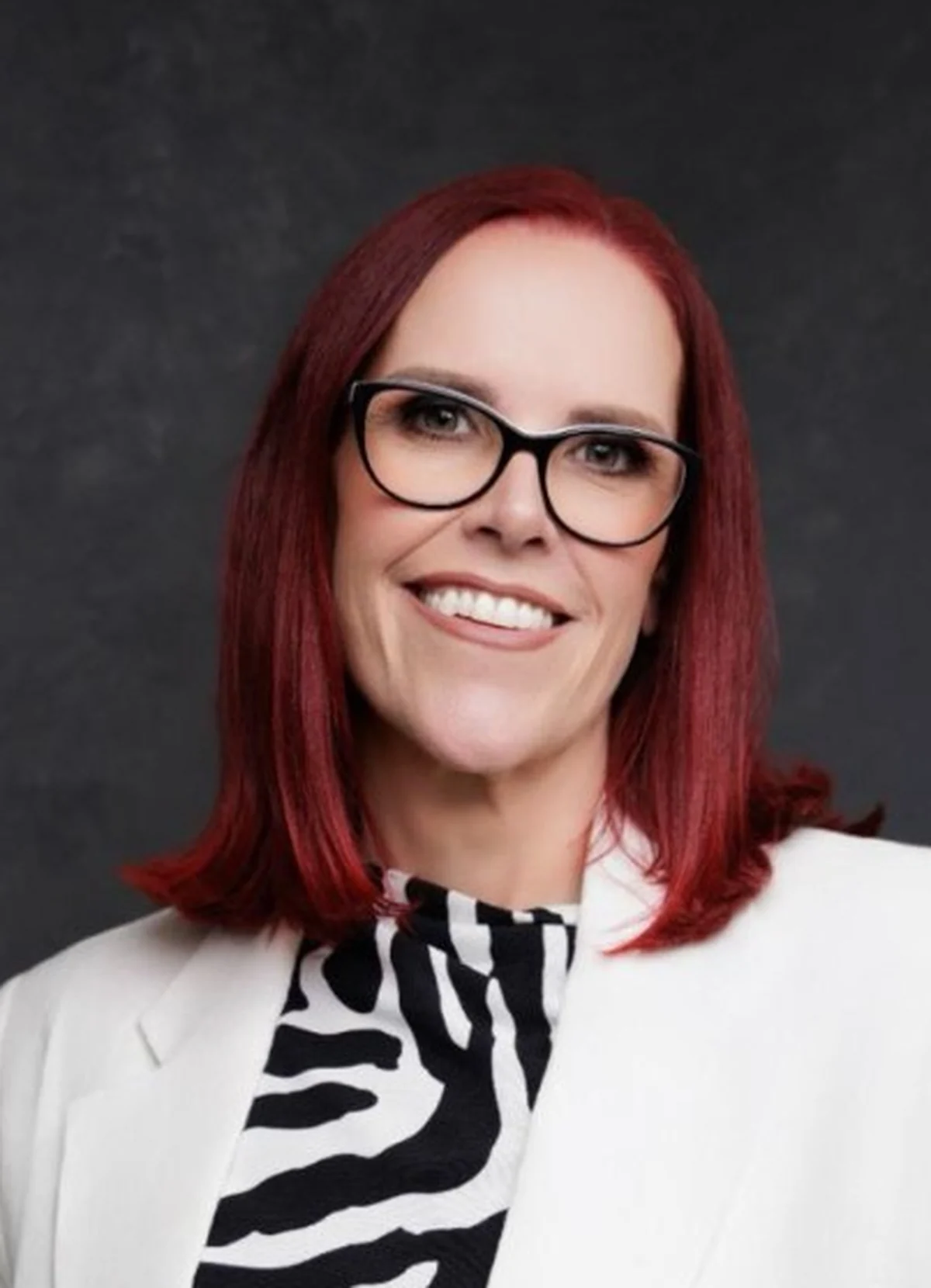
Octavia Maddox
Gallup-Certified Strengths Coach & Founder
Former Chief Product Officer at Kmart and Target (Wesfarmers), with senior roles at WooliesX, Westpac, AMP, and the Australian federal government. Executive MBA. Master of Technology.
Read more →
Dr Jana Paulech
BSc(Hons), GradDip(Psyc), PhD
Former principal consultant working with some of Australia's largest companies on their strategy to maximise connection and performance. Trained and coached dozens of product managers and leaders. Hired and managed teams in scale-up SaaS environments.
Read more →The half day is for a team deciding together how it works with AI. The fast track is for you, set up around your own week.
Many leaders do the fast track first, then bring the half day to their team.
It’s rarely the tool. People aren’t sure what’s allowed, worry about what it means for their job, or haven’t seen it work on their own tasks.
The half day works on all three: what AI is for in your team, what’s safe to share, and trying it on real work together.
For why mandates make people fake it, read our article on AI in the workplace.
A ban on its own tends to push AI use out of sight, onto personal phones and accounts. Approved tools and clear rules on what data goes where work better.
When people can say what they tried, the good ideas spread and the risky ones get caught early.
For what happens when AI use goes out of sight, read our article on AI in the workplace.
Managers carry the risk when an AI draft goes wrong, and they’re usually measured on getting things right, not on trying new ways of working.
Give them room to test, and measure how the work changes rather than how often people log in.
For why managers hold back, read our article on AI in the workplace.
Agree, task by task, where AI does well in your work and where a person checks it. A polished draft is not the same as a right answer.
For the research on polished drafts and the jagged frontier, read our article on AI in the workplace.
No. We start where your team is, from people who’ve never opened a chatbot to people who use it every day.
The ones your organisation already allows. The session is about how you work with AI, which carries across tools.
Yes, that talk is part of the session. People hear what changes, what doesn’t and what stays theirs, then help decide the rest.
When change piles up, people can run out of energy. For the signs to watch for, read our guide to burnout.
Yes. Knowing each person’s strengths helps a team decide who uses AI for what.
See team engagement for kickoffs and offsites.
We’ll suggest where to start.